
Planet Clicker - Build a Solar Empire From a Single Tap
Game Overview
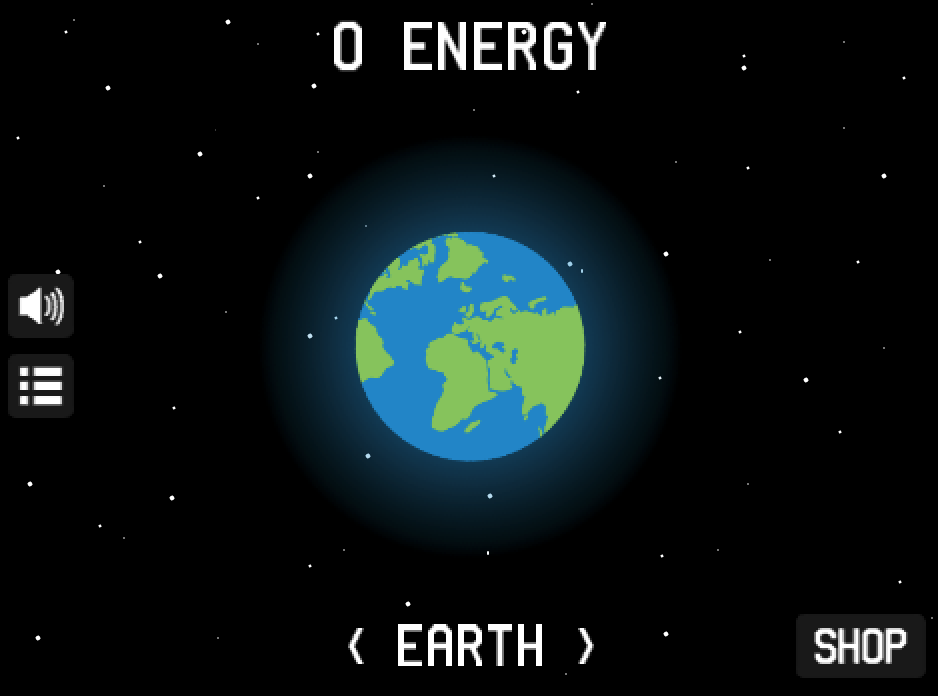
Planet Clicker turns the solar system into a resource spiral where every tap generates stardust and every upgrade pushes you closer to interplanetary domination. Planet Clicker starts humbly on Earth: one blue marble, a handful of farms, and a tiny energy counter. Within minutes you unlock Mars and eventually Venus, each with their own price curves, multipliers, and art style. Planet Clicker nails the fantasy of watching infrastructure bloom across space, complete with dramatic zoom-outs and chunky synth beats.
What separates Planet Clicker from generic tap games is its emphasis on long-term planning. Earth specializes in cheap click multipliers, Mars introduces mid-tier passive generators, and Venus acts as the late-game prestige sink that forces you to think in trillions. Planet Clicker keeps every world relevant by making each one feed into the next; Earth boosts all other planets, Mars duplicates Earth’s best upgrades, and Venus offers rare modifiers that retroactively pump Earth and Mars production.
The presentation completes the hook. Planet Clicker uses scratch-built art that evolves with each purchase, turning empty backgrounds into bustling orbital trade routes. Instrumental loops shift from mellow Earth pianos to driving Martian drums and ethereal Venus choirs so you always notice progression even during idle stretches. Accessibility features—auto-save, colorblind-friendly indicators, and a clean math readout—make Planet Clicker perfect for quick sessions or multi-hour marathons.
There is also a subtle layer of goals that keeps Planet Clicker sticky. Weekly “Launch Windows” challenge you to unlock Venus faster than your previous record, and the achievement log tracks milestones like “10 Million Energy Without Mars” or “Venus in Under an Hour.” Shareable replay codes let friends load your exact Planet Clicker run to compare strategies, turning the game into a friendly race without requiring real-time multiplayer.
How to Play Planet Clicker
Planet Clicker’s loop is simple: click to generate energy, spend energy on upgrades, unlock new planets, repeat. Start by tapping Earth until you can buy the Level 1 Click Multiplier and the Basic Farm. Those two purchases instantly double manual income and add a steady 1 energy per second. Next, unlock the Wind Turbine, Hydro Plant, and Solar Farm trio so your passive income keeps pace with manual taps. Once Earth produces roughly 500 energy per second, bank 100,000 energy to unlock Mars.
Each planet behaves differently:
- Earth: Cheap upgrades, low output ceiling. Focus on click multipliers, automation toggles, and the Earth Core Reactor (unlocked at 1M energy) that gives a 25% boost to all other planets.
- Mars: Mid-game workhorse. Unlocks at 100K energy but truly shines after you invest 5M+. Purchase Martian Colonies (passive income), Terraforming Pumps (+50% to all Mars structures), and the Dust Storm Amplifier that doubles production during random storms.
- Venus: Endgame powerhouse unlocked at 1 trillion energy. Everything costs millions, but each generator produces more than entire planets combined. Statues of Aphrodite grant permanent global boosts, and the Venusian Mirror array reflects light back to Earth for massive synergy.
Planet Clicker thrives on balance. Spending exclusively on Earth stalls Mars unlocks, while ignoring Earth makes Venus upgrades painful because you lack core multipliers. A good rule of thumb is to keep 40% of your budget on Earth until Mars earns more than half your total income, then shift to 30% Earth / 50% Mars / 20% savings for Venus. After Venus unlocks, maintain 20% Earth, 25% Mars, 55% Venus to keep all synergy bonuses active.
Active weather modifiers add spice. Solar Flares temporarily add +100% to click value, Meteor Showers double passive income, and Auroras slow time so you can click more effectively. Planet Clicker gives you three reroll tokens per hour; spend them hunting for Flares before manual sessions and Meteors before logging off. Golden Satellites occasionally float by—click them for instant energy equal to 30 seconds of total production.
Do not ignore the analytics tab tucked under the pause menu. Planet Clicker charts energy production by source, tracks your best combo streaks, and forecasts when you will afford the next major upgrade. Reviewing these graphs every few hours reveals bottlenecks—for instance, you might realize Earth is still contributing 40% of income, signaling it deserves another multiplier despite Mars being unlocked. Integrating those insights turns Planet Clicker from a tap toy into a satisfying optimization sim.
Expert Tips for Planet Clicker
Prioritize multipliers over raw generators. Planet Clicker frequently offers upgrades that increase all structures by 10–25%. Buying two multipliers often beats purchasing one expensive generator because multipliers affect everything you already own. Track return on investment (ROI) by dividing price by added energy per second; anything with ROI under 120 seconds is usually worth snapping up immediately.
Use Earth as a testing ground. Because Earth upgrades are cheap, experiment with click timing, combo bursts, and automation ratios here before committing to pricey Mars or Venus purchases. Planet Clicker’s combo meter grants up to +200% if you maintain rapid clicking for 15 seconds, so practice on Earth until you can consistently hit the cap. Once comfortable, trigger a Solar Flare on Venus and replicate the rhythm for astronomical payouts.
Mars thrives on downtime. Upgrade Martian Colonies and Dust Harvesters right before you log off so their passive earnings stack while you are away. Planet Clicker calculates idle gains using average production during the last 30 seconds of play, so ending on a high-production state massively increases offline income. Consider leaving one reroll token unused; if you return during a Meteor Shower, pop the reroll to fish for another favorable weather effect before going idle again.
Venus is all about compounding synergy. Each Venus generator (Cloud Refineries, Lava Extractors, Mirror Arrays) permanently boosts Earth and Mars by a small percentage. That means even if Venus already dominates your income, buying another Mirror Array still raises the value of every earlier world. When a Venus upgrade costs more than four hours of income, save for the next synergy unlock instead; Planet Clicker rewards patience with exponential jumps.
Finally, do not forget the prestige system. Once you hit 100 trillion total energy, Planet Clicker unlocks “Interstellar Influence,” a prestige currency that adds global multipliers and special artifacts such as Quantum Batteries (permanent click boosts) or Wormhole Relays (chance for free satellites). Prestige when progress slows to a crawl, spend influence on artifacts that suit your playstyle, and enjoy how much faster Earth and Mars rebuild afterward.
Recommended Games and Next Steps
If Planet Clicker’s cosmic scale hooked you, try Cookie Clicker to see where prestige trees and golden events originated. Players craving relaxation can alternate with Chill Clicker or Chill Guy Clicker; the skills you developed in Planet Clicker—timed bursts, balanced automation, prestige timing—translate perfectly. For a meme-fueled detour, Brainrot Clicker and Chill Girl Clicker wrap similar math in viral internet aesthetics.
Want to sharpen pure tapping speed after optimizing Planet Clicker? Jump into Spacebar Clicker 2 or its superhero sequel Spacebar Clicker 3 and turn DPS theory into finger workouts. To keep the space theme going, queue Sprunki Clicker for musical experimentation or revisit Planet Clicker each week to chase faster Venus unlock times. The solar empire will always welcome another burst of stardust.
Need fresh options? Jump back to the home page to browse every category.